
Our work

What we have done, described carefully.

Client work is confidential, so we describe it by sector, scale and problem. Named references are available one-to-one once we are in serious discussion, with the client's permission.

Participants seated around tables during a forum theatre session, blurred to protect their privacy

Flagship · DEI in male-majority field sales

Two-day programmes for women professionals at a large FMCG conglomerate.

Problem
Frontline women in a male-dominated sales environment were routinely talked over, and their boundaries were tested.
What we did
Two two-day workshops for ground-level women frontline workers: physical theatre, vocal practice and scenes built from their everyday interactions, delivered as part of the client's DEI initiatives. We also set up a peer support structure that the women kept using after the workshop.
Reported outcome
More confidence in difficult conversations, stronger voice and presence, more active participation and less emotional fatigue, as reported by participants and the client.

After the workshop we kept supporting each other. It helped us understand ourselves, and now I handle difficult situations better: I am more assertive, I control my voice, and I know what my body is saying.

A frontline sales participant, FMCG programme. Paraphrased from participant feedback.
What happened next
The client came back with a harder brief: bring the men into the room. How men talk to women in male-dominated spaces, and how men take over roles without being assigned them.
What we diagnosed
Automatic behaviours, not attitudes. Who interrupts whom, whose idea gets credited, who takes the pen.
How we designed it
Two cohorts at two levels, two days a week apart, with the Floor Audit, Nine Seconds and the Register Switch, and commitments logged with HR.
What it shows
Design from a named behaviour, adapted to hard constraints such as group size, gender ratio and field schedules, with measures set before delivery.
More of the work

Life sciences · whole workforce

A company song in an aircraft hangar

A mass sound and songwriting workshop for a global life-sciences technology company, ending in a performance by the whole workforce. HR received participation patterns, never observations of individuals.

Luxury and retail · a global luxury drinks house

Listening, rhythm and improvisation

Rhythm-making and improvisation for a team where women were less vocal, to address subtle gender imbalances and encourage women-led leadership cues. During the session, more decisions and musical cues came from women, and HR gained a clearer view of gendered dynamics.

Management education

A three-day Sound and Creative Coding Lab

For a leading Indian business school: deep listening, sonic modelling and prototyping in Processing, Strudel and p5.js, for systems thinking and comfort with ambiguity.

Sectors our team has worked with

  • FMCG
  • Technology
  • Life sciences
  • Consulting and professional services
  • Energy and public sector
  • Media and entertainment
  • Aviation and travel
  • Automotive
  • Healthcare
  • Luxury and hospitality
  • Manufacturing and engineering
  • Higher education
  • Government and development

From the room

Our workshops, and earlier corporate work.

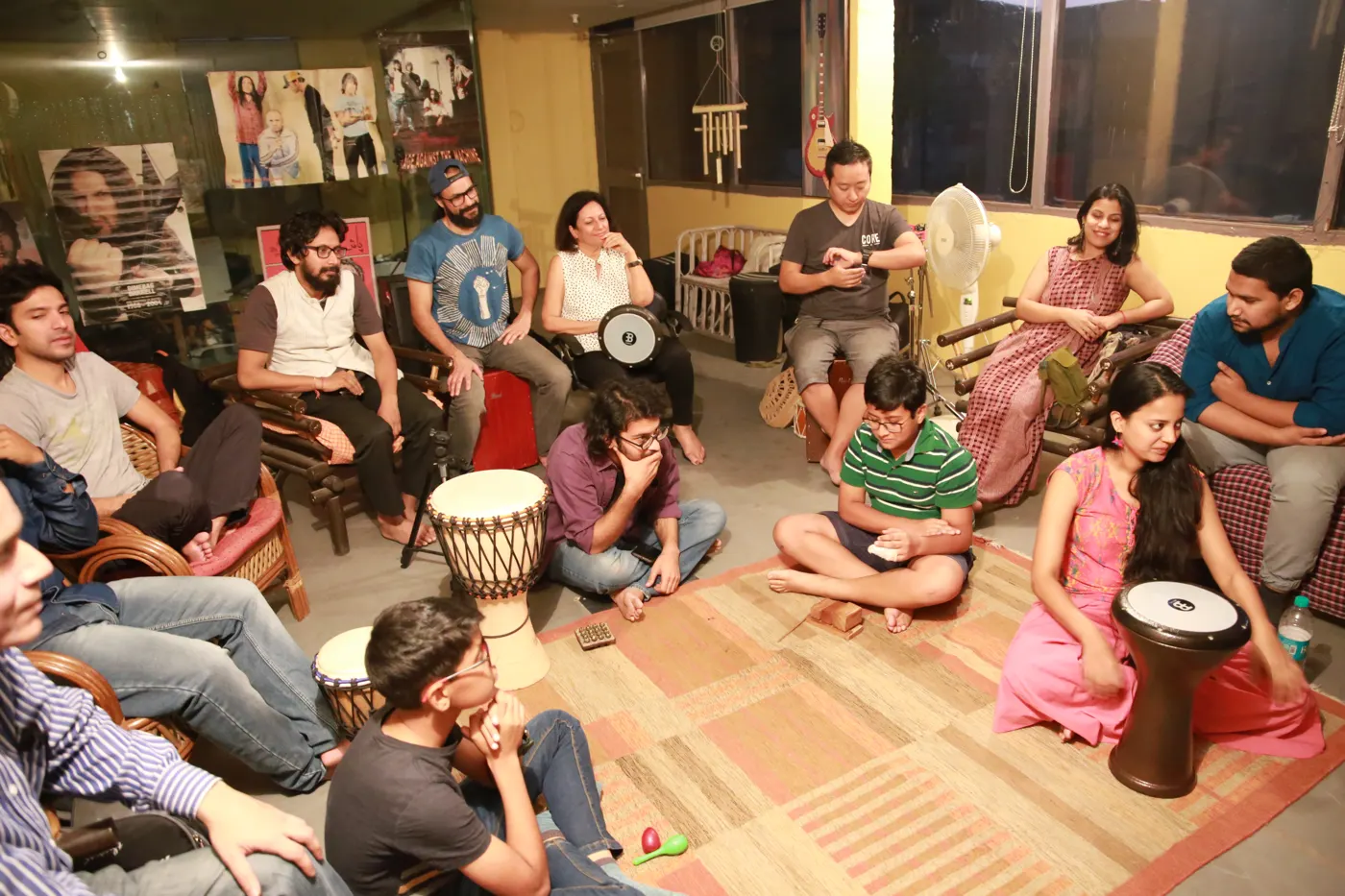
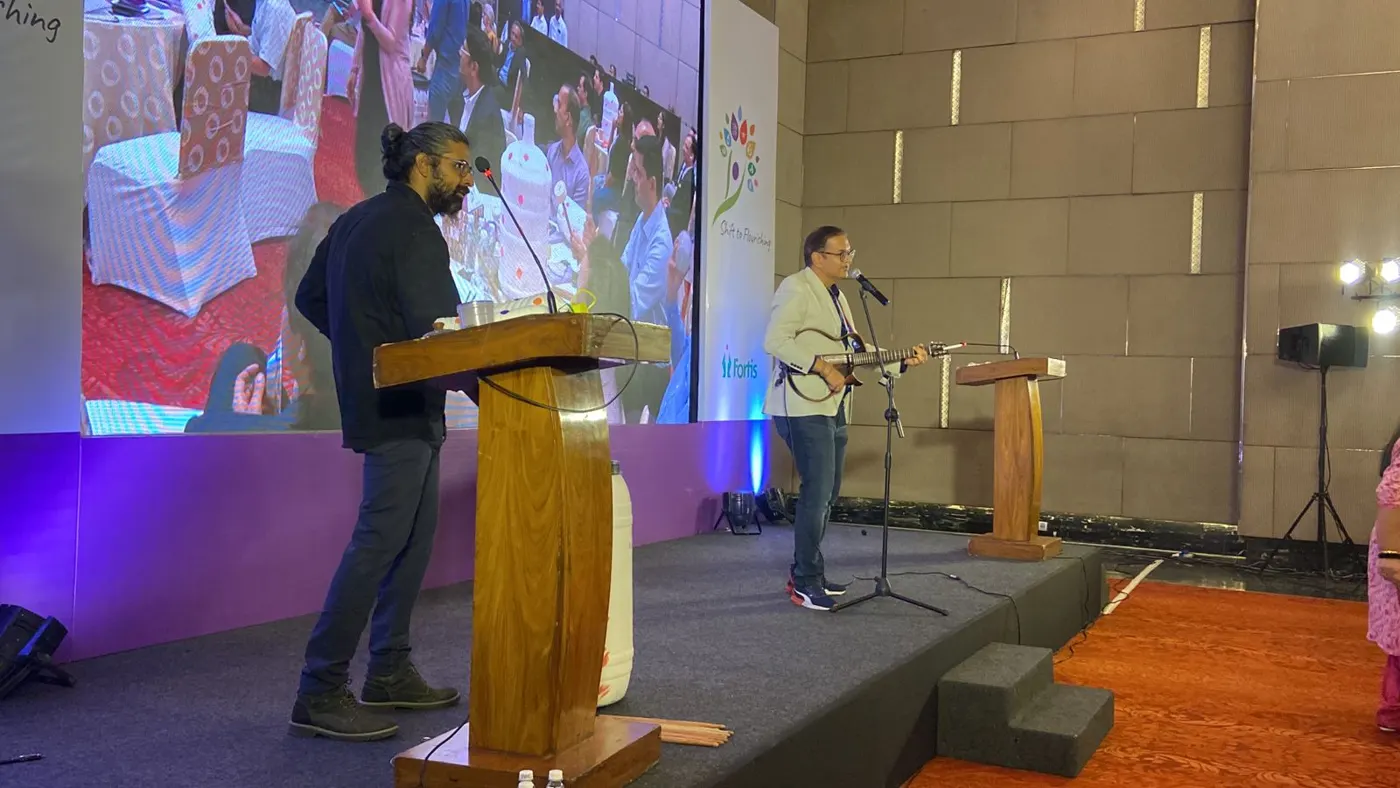
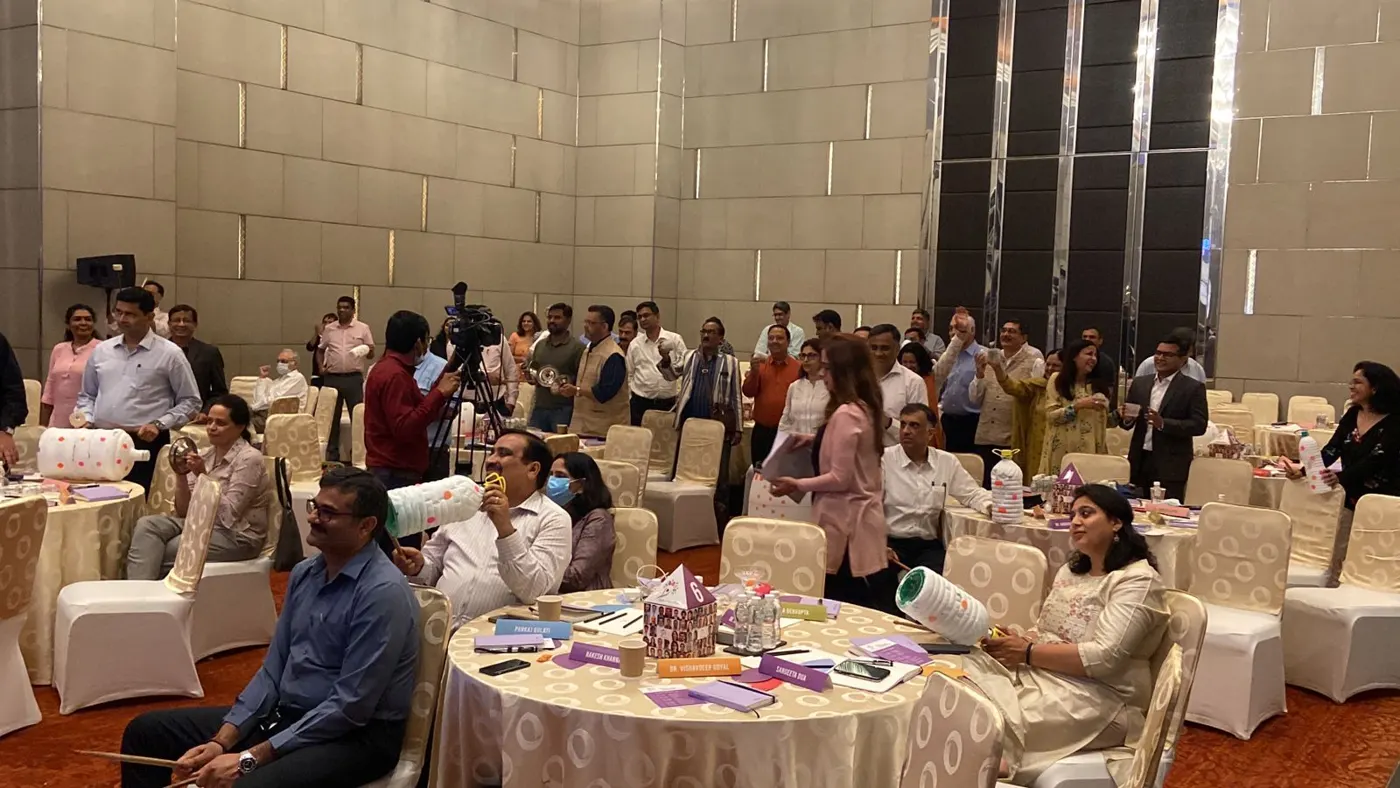
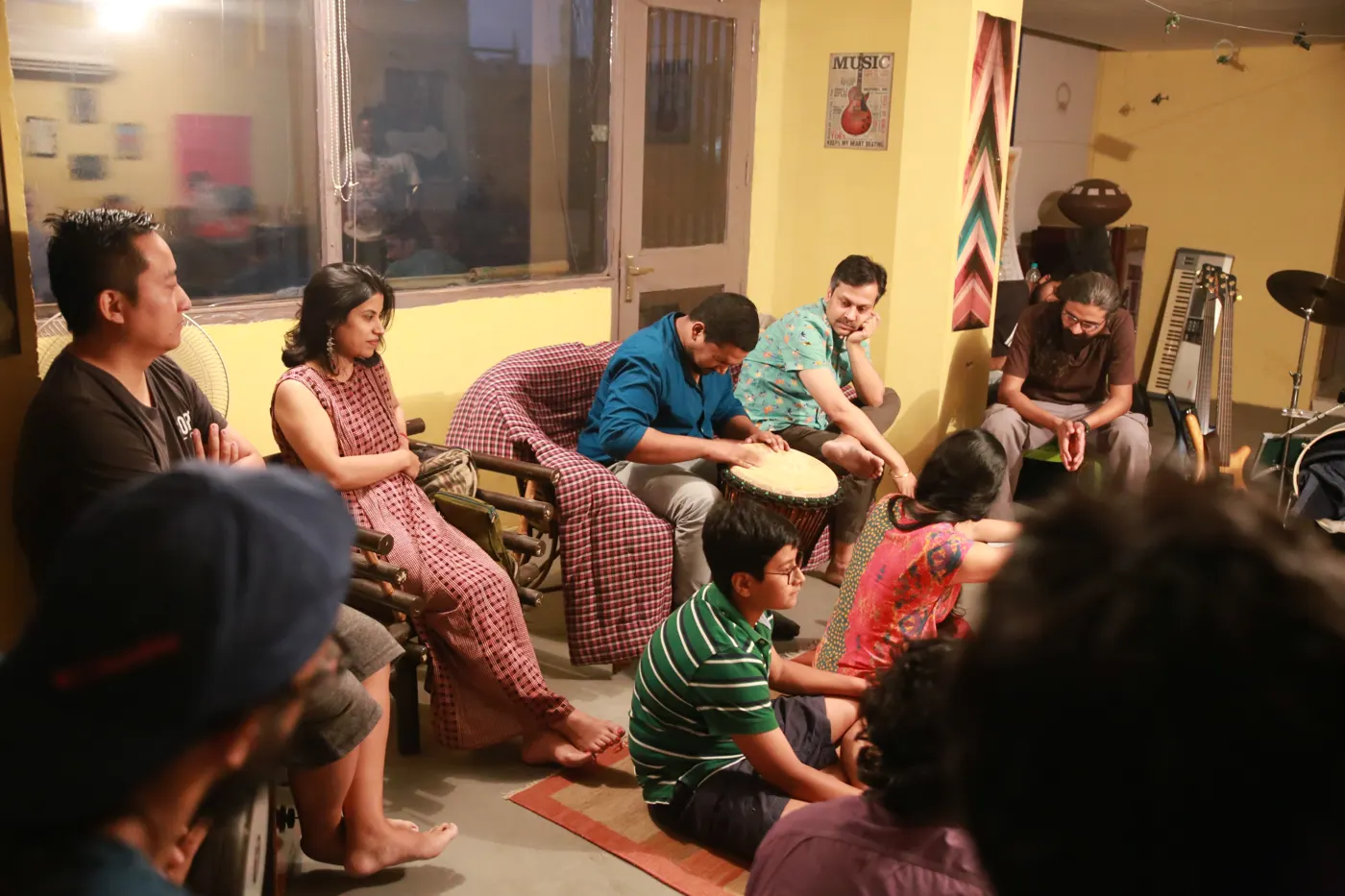
W.I.P workshops in our Delhi studio, and corporate sessions our founder led before ART Immersion.

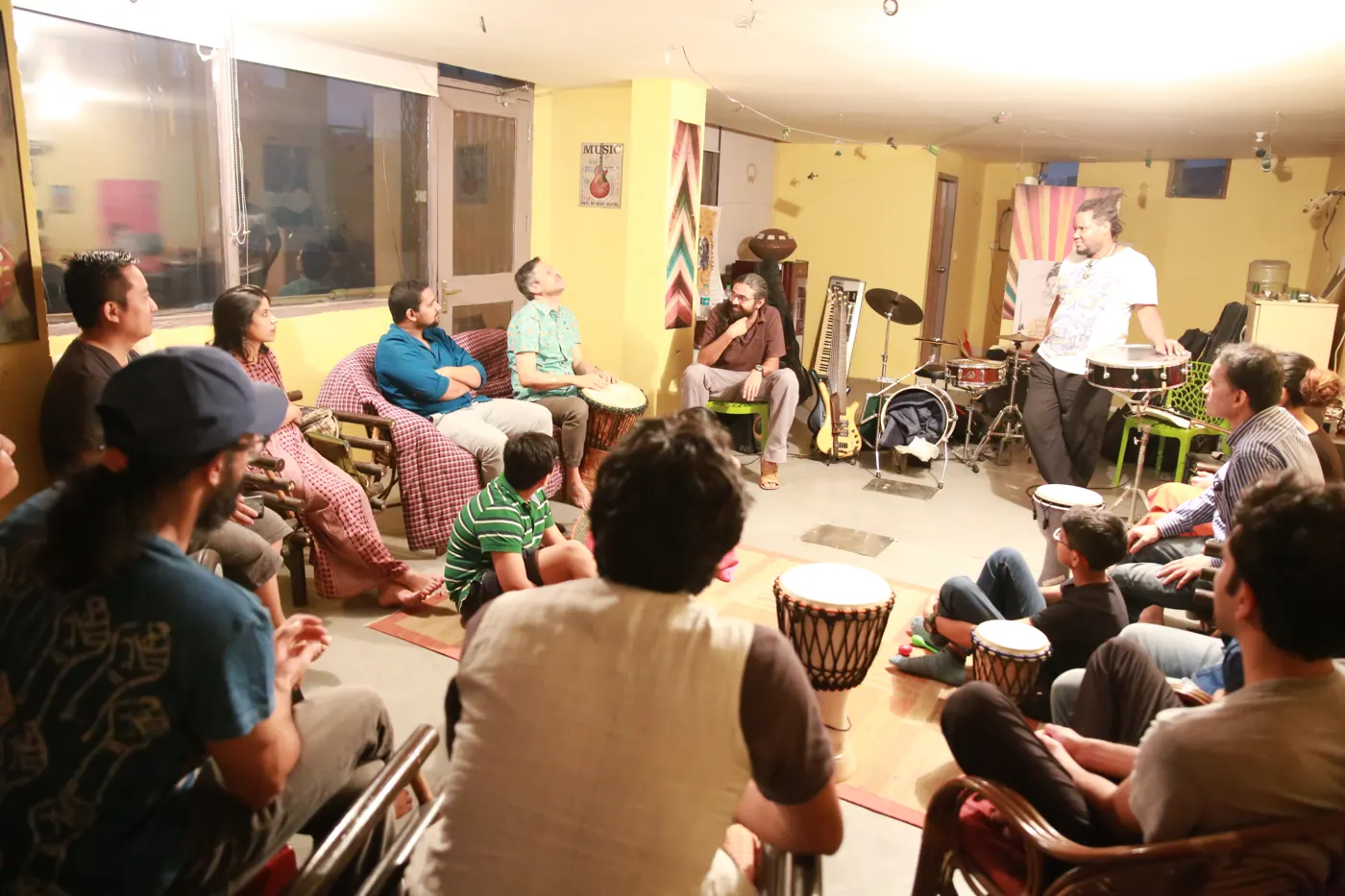
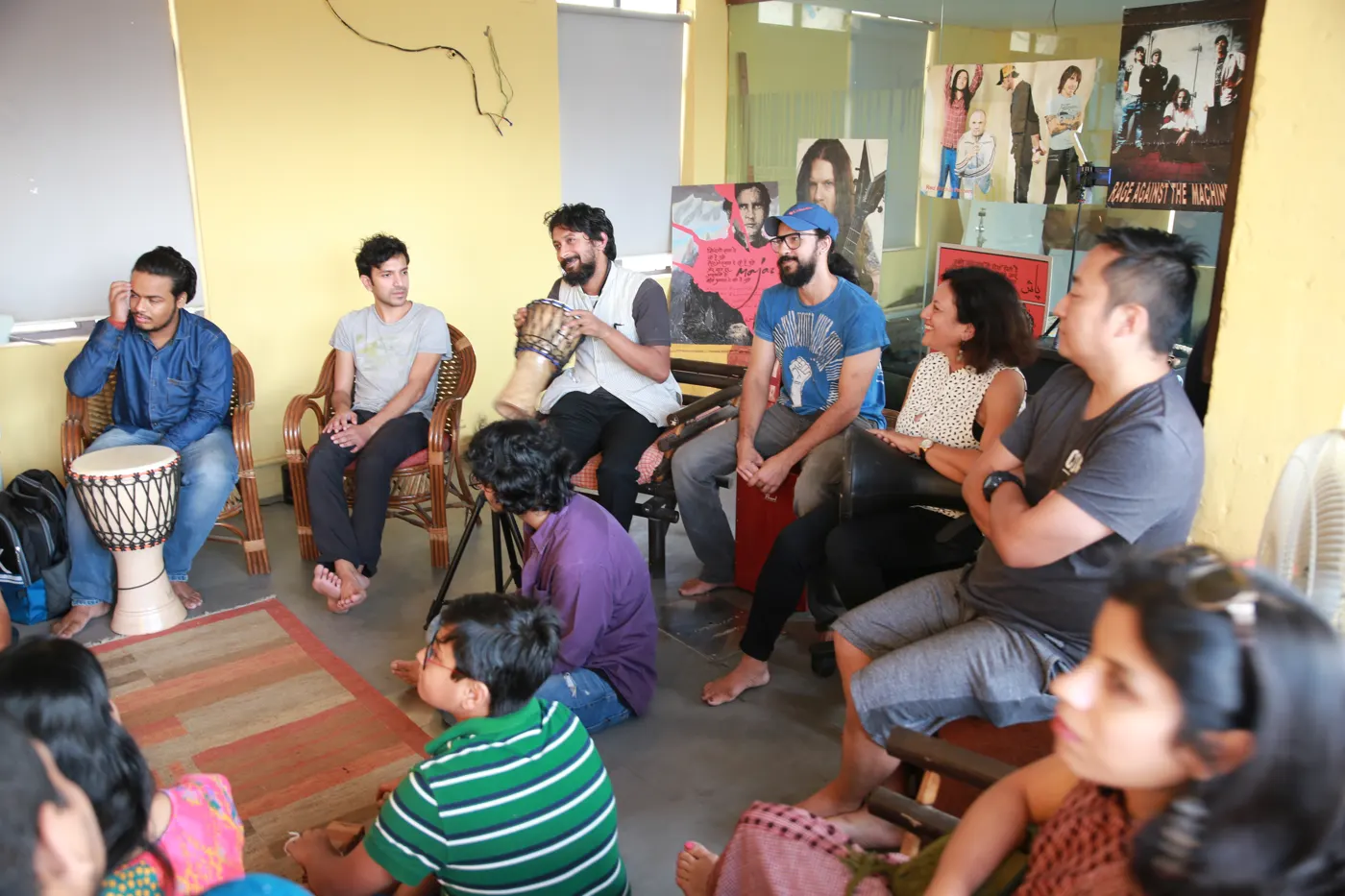
A rhythm circle in the W.I.P studio
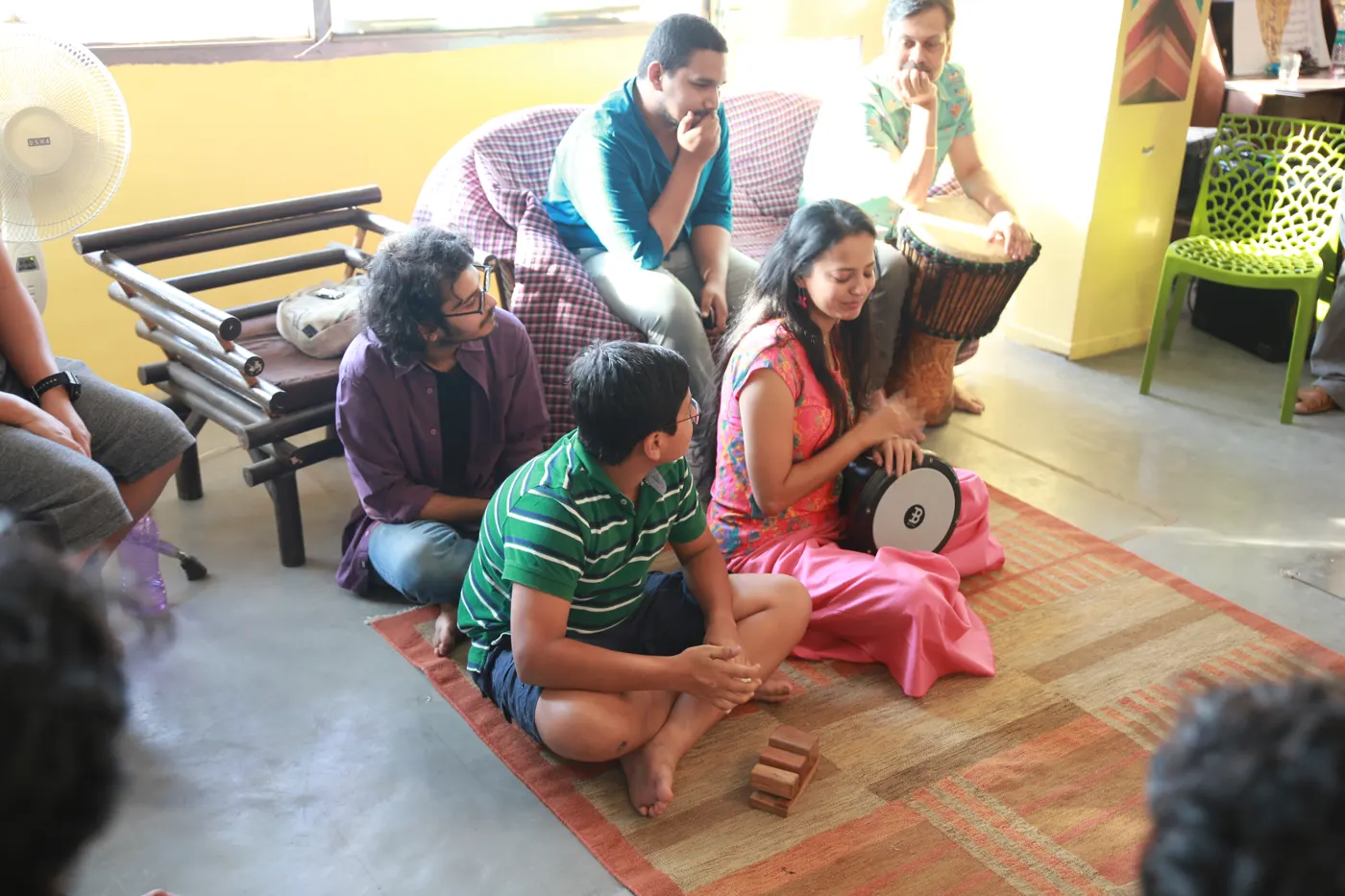
Participants on the floor with hand drums
Two participants playing together
Our founder leading a corporate session
Corporate session led by our founder
A corporate audience during a session
Corporate session led by our founder
A large workshop in the W.I.P studio

Artists inside organisations is not a new idea.

Drama schools in boardrooms, executives inside orchestras, forum theatre on gender bias, and the research reviews on what arts-based learning does and does not do. These are the precedents our programmes build on, with sources.

  • Well-being · 2019

    World Health Organization

    More than 3,000 studies on the arts and health.

    A WHO Europe scoping review led by Daisy Fancourt and Saoirse Finn synthesised over 3,000 studies and found a role for the arts in preventing ill health, promoting health and managing illness.

    Arts engagement is low-cost and multi-modal, which suits complex problems.

    Source: WHO Europe; Jameel Arts & Health Lab

  • Well-being · Recent

    EPFL+ECAL Lab × Pro Senectute Vaud

    Design against loneliness.

    The Resoli app, designed with a Swiss foundation for older people, now counts more than 5,000 events organised by older people in the canton of Vaud.

    Design that starts from how people feel gets used.

    Source: EPFL+ECAL Lab

  • Leadership · 2001 onwards

    RADA Business, London

    A drama school's methods in boardrooms.

    The Royal Academy of Dramatic Art has trained people at work since 2001, for law firms, retailers, media companies, universities and governments in more than 30 countries. Profits fund the training of actors and technicians.

    Presence and communication can be trained the way actors train them.

    Source: RADA Business

  • Leadership · Late 1990s onwards

    The Music Paradigm

    Executives sit inside a working orchestra.

    Conductor Roger Nierenberg's programme embeds corporate professionals inside a symphony orchestra so they can watch how musicians and conductor actually lead and follow.

    Leadership becomes visible when you sit inside the ensemble.

    Source: Princeton Alumni Weekly

  • Teams · Ongoing

    Orpheus Chamber Orchestra, New York

    An orchestra with no conductor.

    Orpheus works without a conductor. Leadership rotates to whoever the music needs, and its former executive director Harvey Seifter set out the method for managers in the book Leadership Ensemble.

    Shared, rotating leadership is a practice, not a slogan.

    Source: HR Reporter

  • Teams · 2000s

    AIRIS, Sweden

    Artists in residence inside ordinary companies.

    Musicians, actors, painters and choreographers worked inside Swedish companies for ten months. Staff responded positively; the 2005 evaluation found limited effect on workplace climate, the 2006 evaluation more positive effects.

    It works when both sides commit, and effects need to be measured, not assumed.

    Source: Chalmers research

  • Inclusion · 2021

    IFAD (United Nations)

    Forum theatre on unconscious gender bias.

    The UN's International Fund for Agricultural Development used Augusto Boal's forum theatre with staff to examine gender bias at work. Participants stepped into the scene to try alternatives.

    People rehearse a better response before they need it.

    Source: FAO / IFAD

  • The research · 2013

    WZB Berlin review

    What 268 studies say, and what they miss.

    Ariane Berthoin Antal and Anke Strauß reviewed 268 publications on artistic interventions covering 205 organisations. The most documented effects were people seeing more and differently, and a sense of activation.

    They found success criteria were rarely set in advance. We do that first.

    Source: WZB Discussion Paper

Tell us the behaviour you want to change.

Write to us, or book a 30-minute Google Meet. No slides. If art is the wrong tool for your problem, we will say so and tell you what is.

Describe your problem Or book a Google Meet, or email us
W.I.P Labs