How we work

Diagnose first. Then cast, design, rehearse and review.

W.I.P sits between your organisation and the artist. You own the problem and the follow-through; the artist owns the craft in the room; we own the diagnosis, the design, the casting, the quality and the review. The client never briefs the artist directly, and the artist never delivers an unprocessed brief.

Process

The engagement, step by step.

Every step closes with a decision you can see: nothing moves forward until the brief is signed, the facilitator confirmed and the design approved.

0

First call

Is art the right tool?

Week 0

What we do

A 30-minute conversation, no slides. We ask what the behaviour looks like in your team, why now, and what has been tried. If the problem is a skills gap, a broken process or a policy question, we say so: art is the wrong tool for those.

What we need from you

Thirty minutes with whoever owns the problem: HR, L&D, DEI or a business head.

What you receive

Within a week, a short diagnostic proposal with a fixed fee, or an honest no.
1

Diagnose

We understand the problem with HR and your people.

Weeks 1 to 2

What we do

  • A sponsor interview (45 to 60 minutes)
  • A short online pulse for participants (8 to 10 minutes each)
  • Conversations with 5 to 8 participants across levels
  • Where possible, observation of one real meeting

We read the team through four lenses: who is in the room, what people actually do, what is at stake, and which art form already trains the behaviour.

What we need from you

A named sponsor, access to 5 to 8 people, and one meeting we can sit in on. Written agreement that observations will never be used for appraisal.

What you receive

A one-page Diagnostic Brief: the behaviour named precisely, and 3 to 5 indicators of change. Nothing is designed until you sign it.

2

Cast

We choose the art form, then the facilitator.

Week 3, about 3 weeks before delivery

What we do

We map the behaviour against the art forms that train it (the Patchbay), then score possible facilitators from our faculty on craft, fit to the problem, steadiness with a group, and ability to translate the work to working life (the CAST rubric). We always hold a second option.

What we need from you

Nothing beyond the brief. Tell us about language, group size, physical constraints and any cultural or religious considerations.

What you receive

A named lead facilitator and a written reason for the choice. Every lead is paired with a W.I.P learning lead.

3

Devise

We build the curriculum on our frameworks.

1 to 3 weeks before delivery

What we do

We write the learning objectives, build each session on the 4W Arc (Warm, Wobble, Work, Walk-out) and use your real meetings, pitches and scenes as material. We present the design to you in a Pitch-back meeting, in three depths (the Pool). Only after you approve do we refine it with the facilitator, round by round (Track Changes), and hold a dry run.

What we need from you

One Pitch-back meeting to approve the design. Help with participant communication, which goes out from you.

What you receive

A session plan you approve, and a proposal with three options and logistics shown separately.

4

Rehearse

We deliver, in rehearsal conditions.

Delivery day

What we do

The programme runs at your office, at W.I.P aDDa in Delhi, or off-site. Every session opens with the ADDA Agreements: participation by invitation, nobody made the example, anyone can pause. People see the pattern, practise another way several times with notes, and leave with dated commitments.

What we need from you

The sponsor opens for two minutes: why the organisation is investing, and that this is not an assessment. A room with a clear floor.

What you receive

The programme, observation data at pattern level, and a Commitment Log your HR team holds.

5

Review

We report against what we agreed.

Within 10 working days, then 30 to 90 days

What we do

A Post-Delivery Report against the indicators from step 1, including when no further work is needed. In the deeper options, follow-up at 30, 60 and 90 days against the same indicators.

What we need from you

Follow-through: the Commitment Log, manager support, and the business indicators you choose to track.

What you receive

A report within 10 working days, patterns never individuals, and a recommendation for what next. The depth of follow-up depends on the option you choose.

Participants in a rhythm workshop
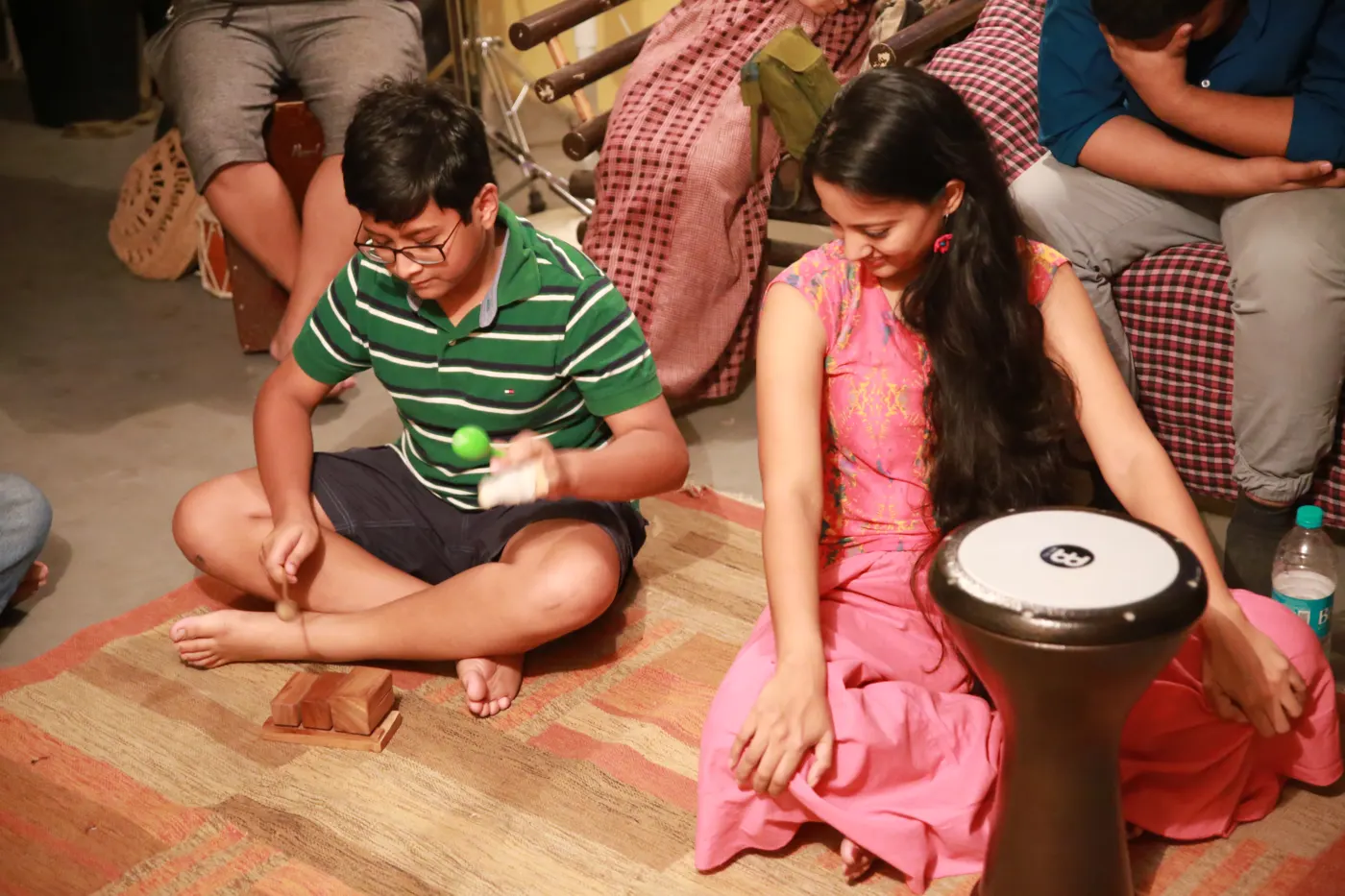
Two participants playing hand drums
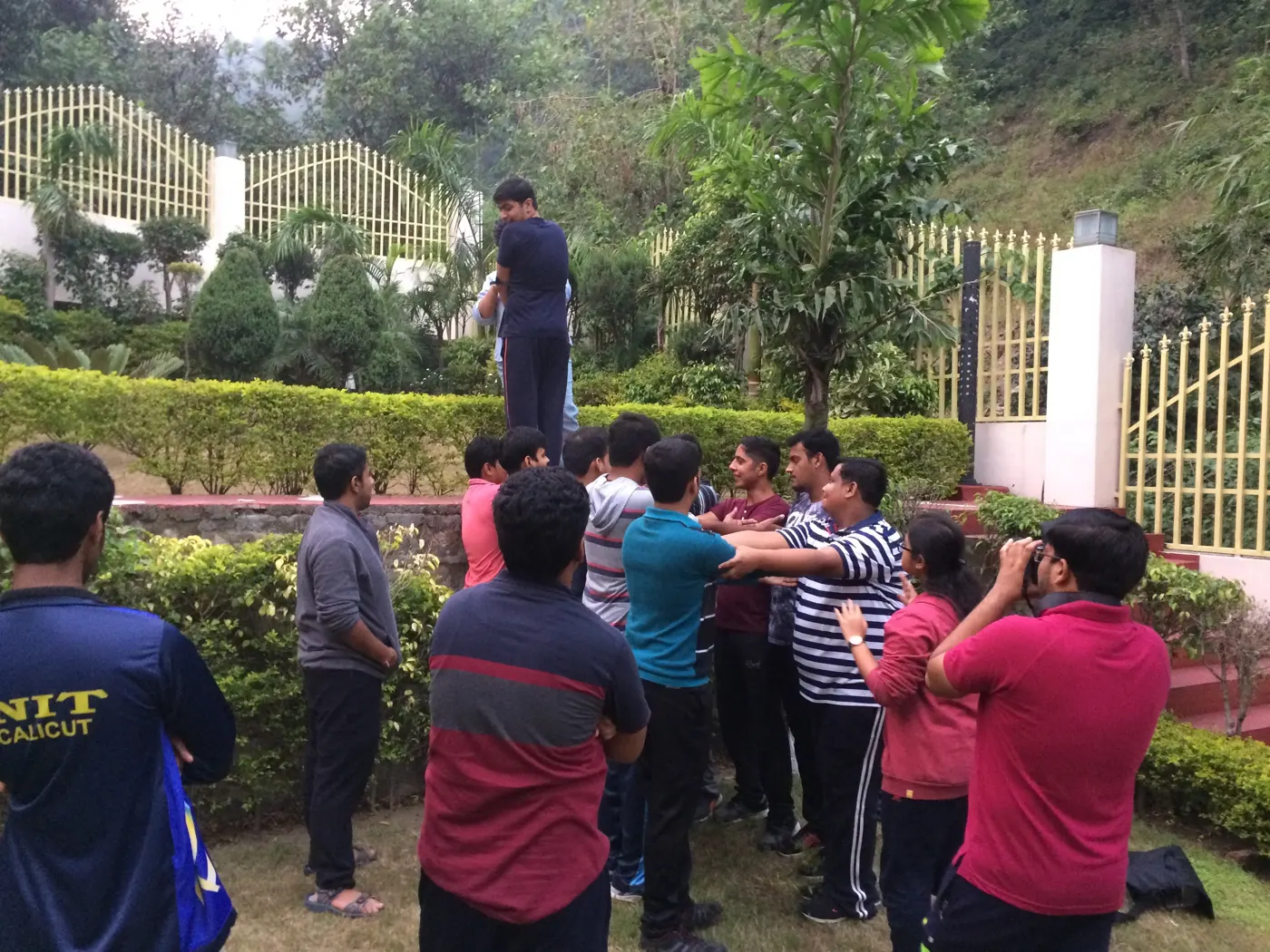
A corporate group working outdoors
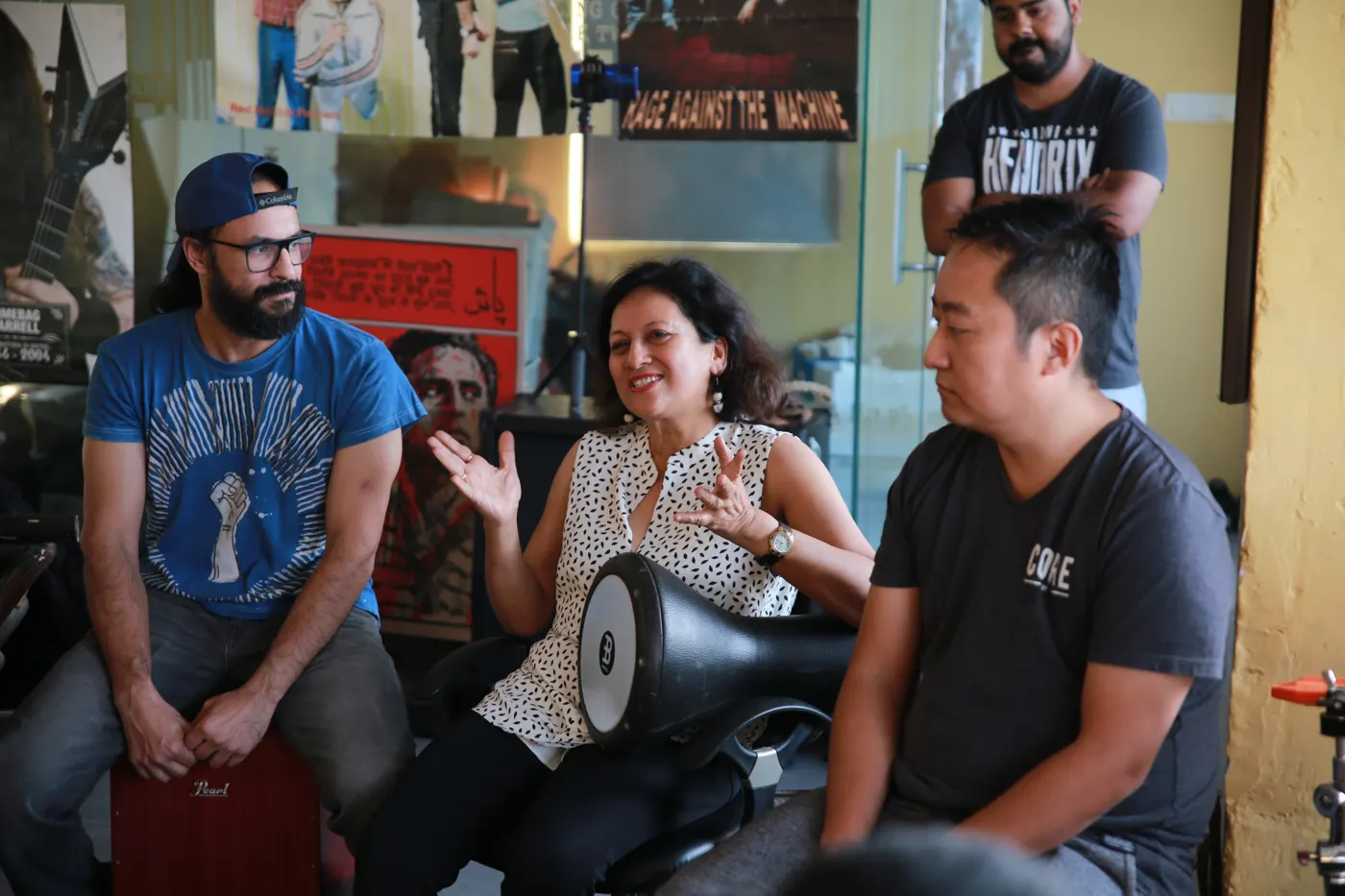
Corporate session led by our founder

Timeline

About six weeks, first call to delivery.

A template, not a promise. Large organisations often need longer for procurement and calendars. Residencies need more time for venue, travel and a safety plan. Faster is possible; skipping steps is not.

  1. Week 0First call
  2. Weeks 1 to 2Diagnosis
  3. Week 2Brief signed
  4. Week 3Facilitator cast
  5. Weeks 3 to 4Design approved
  6. Weeks 4 to 5Co-design and dry run
  7. Week 6Delivery
  8. +10 daysReport
  9. +30, 60, 90 daysFollow-up

Casting

How we choose the facilitator.

Artistic standing alone is not enough. A brilliant performer can be a poor facilitator of a sceptical group of engineers on a Tuesday morning; a trainer who learned some theatre games can hold a room but cannot take it deep. We look for both.

  • The art form first

    We start from the behaviour, not your preferred art form, and ask which practice has spent generations working on exactly this. Then we choose the person.

  • Scored, not guessed

    Each facilitator is scored on Craft, Applicability, Steadiness and Translation. Steadiness, holding a room safely, has a minimum no other strength can make up for.

  • Never alone

    Every lead artist works with a W.I.P learning lead in the room. Inclusion programmes are always co-led by practitioners of different genders.

  • Briefed on your diagnosis

    The facilitator delivers only after they can explain your diagnosis back to us in their own words, and after a dry run.

Safeguards

Safety, consent and confidentiality.

Some discomfort is how people see their own patterns. Humiliation isn't, and the design prevents it. These rules are written into our contract with you.

  • Participation by invitation

    Anyone can watch an exercise instead of doing it, with a useful role. Anyone can pause the room with a raised palm, without explaining.

  • Nobody is made the example

    Nobody has to share a personal story. When we look at a pattern, we look at it in the whole room, never in one person.

  • Patterns, never individuals

    We record behaviour with seat codes, not names, and report in aggregate. Observations are never used for appraisal. If a client wants that, we decline the work.

  • Touch and bodies

    Any exercise involving touch offers a no-touch version first, and mixed-gender groups default to it. People adapt or sit out physical work without having to say why.

  • Images and recording

    No photographs without consent collected that morning. No filming for marketing. Learning recordings only with each participant's consent, never handed to the client, and deleted after the programme unless everyone in them agrees otherwise in writing.

  • If something serious surfaces

    Facilitators are not investigators. If someone discloses harassment or discrimination, we make sure they are supported and tell them privately about your routes, including your Internal Committee under the POSH Act. The content never appears in our report.

  • Inclusion work

    Women are never made the evidence: data comes from observed conduct, not from women describing their experience to male colleagues. A separate caucus decides what, if anything, returns to the main room.

  • Not therapy

    We work on habits in a group. Where a diagnosis points to clinical needs, such as burnout at a medical level or grief, we say so and recommend professional help.

We agree what counts before we start.

Five levels. We report the first four directly. The fifth is yours to track, and we never claim it as our effect.

  1. Response

    Relevance, safety and intent to apply.

    HowA short exit survey with specific items

    WhenEnd of programme

    Reported directly
  2. Observed behaviour

    Change during the programme.

    HowFacilitator coding, first versus final run, video rubric

    WhenDuring

    Reported as patterns, never individuals
  3. Team dynamics

    How the group works.

    HowFloor Audit, Nine Seconds, ensemble observation

    WhenDuring, and in one real meeting after

    Reported, as a snapshot
  4. Workplace application

    Use at work.

    HowSelf-assessment, manager observation, commitment log

    When30 to 90 days

    Reported as association, not cause
  5. Organisational indicators

    Business-level signals you choose.

    HowAssignment spread, segment attrition, survey items, pitch win rate

    When3 to 12 months

    Tracked by you; never claimed by us
  • No invented ROI.

    Too much else moves at the same time. Any rupee figure from a single programme would be made up.

  • No individual assessment.

    Observations are never used for appraisal. If they were, the room would stop being honest.

  • No “people loved it” as evidence.

    Most people enjoy artistic work. We report behaviour, not applause.

What your organisation walks away with

  1. A precise name for the behaviour

    A one-page brief and three to five indicators, agreed before anything is designed.

  2. A module built from your real situations

    Your meetings, your pitches, your hardest conversations. Nothing off the shelf.

  3. People who have rehearsed, not just listened

    They have already tried the new behaviour in the room, several times, with notes.

  4. Commitments your HR team holds

    Specific, dated, logged, and followed up at 30 to 90 days.

  5. A report against what we agreed

    Indicators set before we started, reported as patterns, never individuals.

  6. The method, handed over

    After the first cycle your HR team can run the measurement without us.

Honesty

When we say no.

A diagnosis can end in no. Declining a poor fit builds more trust than delivering badly.

  • The problem is a skills gap, a broken process or a policy question.Behaviour follows the system. We recommend the right help, and return once it is fixed.
  • The brief is to fix one named person.That is a performance matter. We suggest coaching or an HR process.
  • You want individual scores for appraisal.The room would stop being honest. We explain why, and decline that part of the work.
  • There is an active complaint or investigation in the team.A workshop could compromise the process. We wait until it is resolved.
  • A DEI programme would be mandatory and framed as compliance.Research suggests compulsory diversity training can backfire (Dobbin and Kalev, 2016). We recommend voluntary framing.
  • Nobody senior will own the follow-through.The effect will fade, and we say so in the proposal.

Tell us the behaviour you want to change.

Write to us, or book a 30-minute Google Meet. No slides. If art is the wrong tool for your problem, we will say so and tell you what is.

Describe your problem Or book a Google Meet, or email us
W.I.P Labs