 W.I.P Labs
Creative Arts Exploration / Design schools
For design schools
Design schools already understand craft. The question is what else.
We are not arriving to fix a broken system. We are arriving to extend one. A product designer who has worked seriously with sound understands time-based experience in a way visual or material practice alone cannot reach. A communication designer who has practised theatre understands how presence and timing shape meaning. An interaction designer who has studied generative arts has a fundamentally different relationship to code as creative material. These are structural connections, not enrichment.
Courses designed for design schools
Sonic Practice
Sound design · full semester or 1-month moduleStudio course in sound as a design material. Field recording, spatial audio, psychoacoustics, designed soundscapes. Final work: a sound piece for a specific designed environment, whether retail, interface, exhibition or public space.
Sound as material · Acoustic space · Sonic branding · Spatial composition
Code, Chance and Form
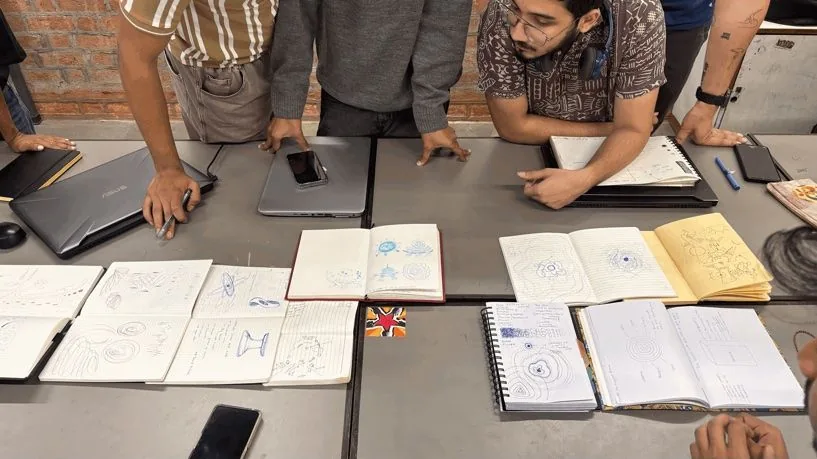
Generative arts · full semesterAt the intersection of code, visual form, sound and chance. Students develop an iterative body of work: not deliverables but experiments, presented with critical statements.
p5.js · Max/MSP · Physical computing · Procedural thinking
The Body in Space
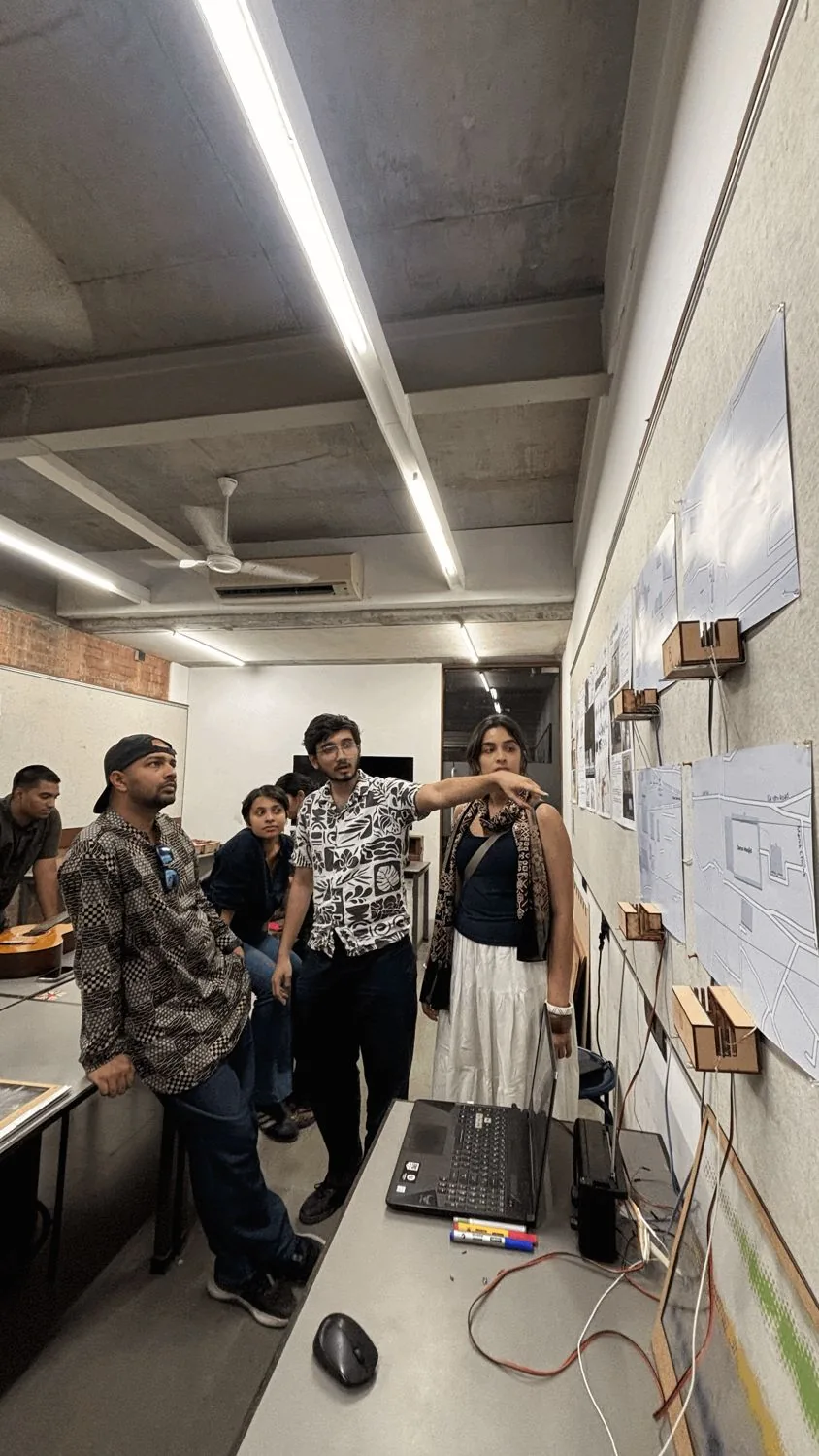
Performance and spatial · 1-month modulePhysical theatre and site-specific performance used to understand how bodies move through, read and inhabit designed spaces. Spatial intelligence that goes past ergonomics into lived experience.
Embodied space · Human factors · Site-specific design · Temporal experience
New Media: Practice and Theory
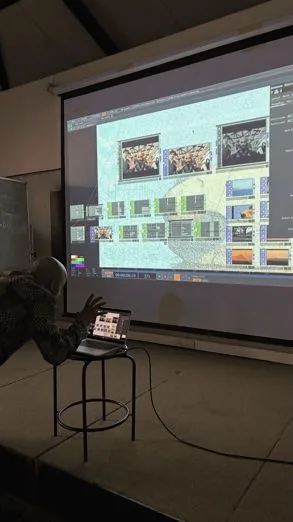
New media · 1-month or full semesterStudio-seminar hybrid. Critical theory paired with hands-on practice in video, interactive media and data visualisation. Practice as an argument.
Manovich and Hayles · Indian digital culture scholars · Digital production · Documentation
Puppetry, Animation and the Object
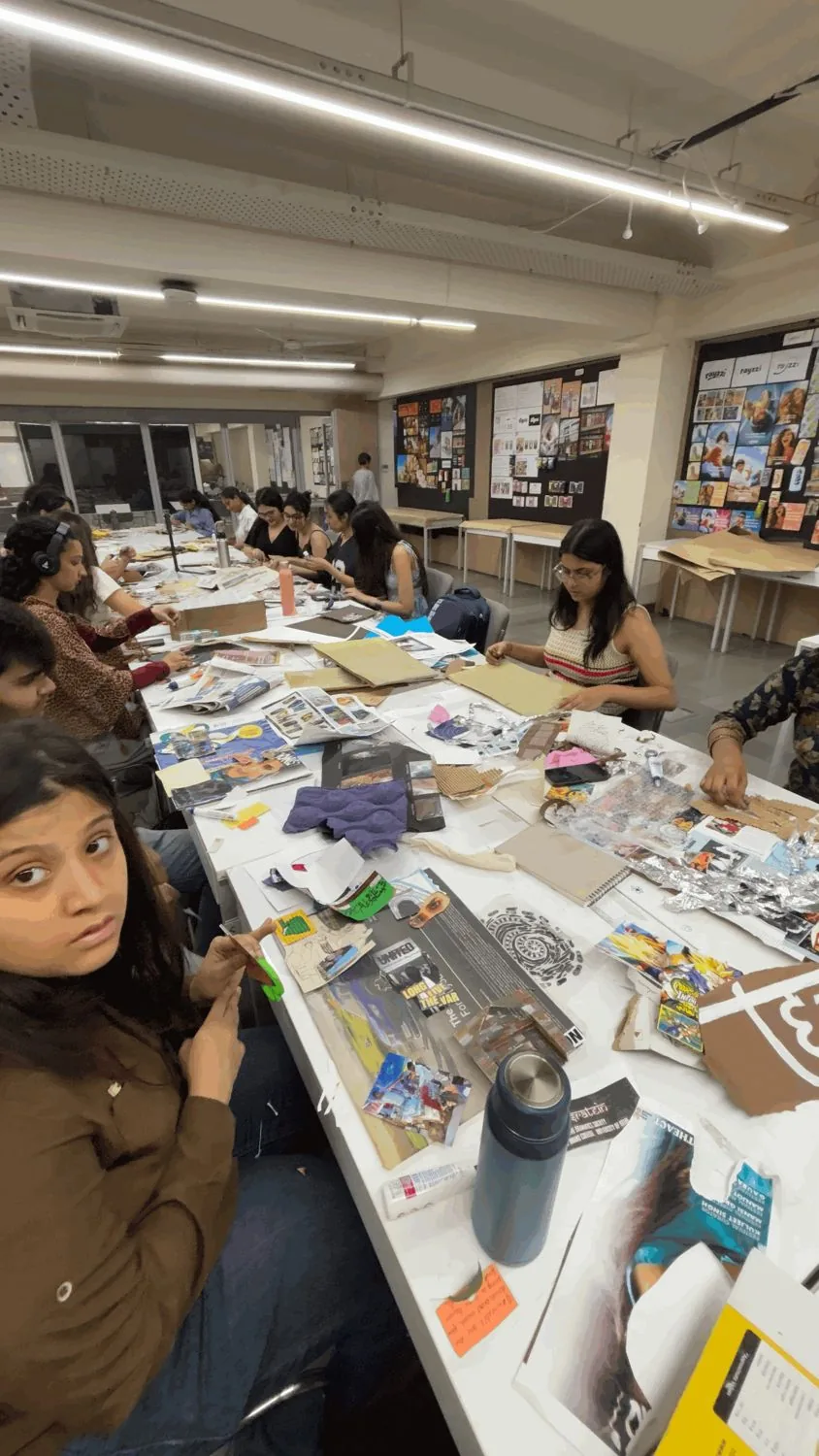
Object and material practice · 1-week or 1-monthHow designed objects become performers and how material things carry narrative. Directly relevant for product, character and narrative designers.
Object as narrative · Material intelligence · Animation thinking · Craft and concept
IP, Authorship and the Creative Economy
Law and practice · 1 weekCopyright, moral rights, licensing, AI and authorship from the practitioner’s perspective rather than as compliance. Strategic frameworks for designers working in an economy increasingly shaped by intellectual property.
IP for designers · Creative economy · AI and authorship · Licensing strategy
Engagement formats
Entry intensive
A one-week studio module of about 45 hours during a studio week or inter-semester break. Low commitment, high signal: both sides learn whether a deeper partnership makes sense.
Core module
A one-month embedded programme at three to six hours a day. Full curriculum, facilitation, materials and assessment. The most common starting point for a new design school partnership.
Full semester
Faculty embedded across a semester teaching one interdisciplinary studio course or a sequence of related modules. Credit-bearing, co-taught with your faculty if you want it.
The next step is a thirty-minute call.
Which cohort, which semester, how much studio time you can protect, and what you want them to have made by the end of it. We come back with a course outline written for your credit structure.
+91 73887 28268